Monday, November 9, 2020

The AP News Trust's Pre-1990's Hidden History Revisited: Part 2

Wikicommons photo by Alterego

The son of Ohio Democratic Congressional Representative George Cooper—Ken Cooper—was institutionally racist AP’s general manager and executive director for much of the first half of the 20th Century. In his 1959 autobiography, Kent Cooper And The Associated Press, AP’s former executive director also referred to AP’s special influence by observing that “there is no other organization on earth whose product touches the daily lives of so many people as does that of the Associated Press” and that AP news was being distributed by “several thousand newspapers, radio and television stations” by the late 1950s.

By the 1980s, The International News Services by Jonathan Fenby estimated that “1500 newspapers and 5700 broadcasting stations” distributed AP news in the United States and about 8850 foreign media organizations also were the recipients of AP-provided news. The same book also noted that “The AP’s radio and television members get two services: a special news wire edited and written for broadcasters and an audio service of voice reports and sound recordings.” In 1988, Introduction To Mass Communications also revealed that “The Associated Press…collects and distributes news in 108 countries” and “more than 1500 news staff members serve AP around the world in 222 news bureaus.”

 In 1991, the World Book Encyclopedia estimated that AP was collecting and distributing news in six languages to media outlets in 115 countries. To supply AP news rapidly to its affiliated newspapers and broadcasters, AP “uses an extensive network of leased satellite circuits, submarine cables and radio transmissions,” according to The World News Prism by William Hachten.

One reason why institutionally racist AP doesn’t often send news that is too critical of either other institutionally racist Big Media institutions, or the people who own Big Media outlets, over its wires is that AP is controlled by Big Media owners—not by AP employees, newspaper or news website readers, radio listeners or TV viewers. AP-affiliated newspaper owners and broadcasters in the U.S. elect a board of 18 directors from among Big Media owners and this AP board of directors appoints AP’s chief executives. In 1937, Fortune magazine also noted that “in corporate matters—the allotment of assessments, the hours that members shall be allowed to publish editions containing AP news, the quarrels between members—the board’s decision is final” and “It acts as both judge and jury.”

The AP board of directors “has summary authority to cut off the news report, or recommend expulsion, or impose fines” on AP members and “In past years the board’s fines have totaled as much as $2,000 at a single meeting, ranging from $10 to $15 against small papers and up to $1,000 against the rich ones,” according to Fortune. The same magazine also revealed that by 1937 “at least half of the AP’s membership has thus been disciplined at one time or another.”

Fortune described how AP’s board of directors functioned in the 1930's:
 
“The Directors meet in a paneled room on the seventh floor of the AP headquarters in New York City, soundproofed from the quarter of an acre of chattering printers on the floor below. Eighteen chairs are ranged around three sides of a long rectangular oak table and in front of each is a heavy brass ash tray. Nine months a year the chairs stand empty; but for two or three days in January, April and October they are occupied by the directors—the most imposing group of men in U.S. journalism…No cabinet or council anywhere sits with more gravity or with a deeper consciousness of authority.”

Associated Press/AP Board of Directors in 21st-century

In the early 20th Century, a researcher named Kittle “made a study of the members of the AP’s board of directors and found that 14 of them were `conservative or ultra-conservative’” publishers whose papers were “huge commercial ventures, connected by advertising and in other ways with banks, trusts, companies, railways and city utility companies, department stores and manufacturing enterprises” and which “reflect the system which supports them,” according to The Brass Check by Upton Sinclair.


And in his 1959 autobiography, former AP executive director Kent Cooper wrote that “some newspapers are indeed owned by copper mining companies, by railroad companies, newsprint and a wide variety of other manufacturers, by bankers, politicians, oil companies, church organizations and men of great wealth who have wanted to own newspapers to satisfy their ego or just for the fun of it” and “such diversified interests are joined into one group under the name of The Associated Press.”

Among the Big Media owners who sat on the AP board of directors together during the first half of the 20th Century were the publishers of the supposedly competing New York Times, Atlanta Constitution, Washington Star, Baltimore Sun, Philadelphia Bulletin, St. Louis Globe-Democrat, Spokane Spokesman, Minneapolis Tribune, Cleveland Plain-Dealer, Chicago Tribune, and Des Moines Register & Tribune.

(end of part 2) (This article originally appeared in the July 7, 1993 issue of the now-defunct Lower East Side alternative weekly, Downtown)

Sunday, November 8, 2020

The AP News Trust's Pre-1990's Hidden History Revisited: Part 1


Wikicommons photo by Alterego

“The dominant and largest institution in the world news system is AP, a cooperative owned mainly by American newspapers…AP’s central role is undisputed. By the agency’s count, more than a billion people have daily access to AP news…”

The World News Prism by William Hachten in 1987


“While having an abundance of numbers and giving an appearance of diversity, the mass media actually are highly centralized outlets that proffer a remarkably homogenized fare.”

Inventing Reality by Michael Parenti in 1986


“If there is in this country a strictly capitalist class institution it is the Associated Press.”

Eugene Debs in 1912


Although the Big Media newspapers, radio news departments and television stations are supposed to be competing with each other, the same news headlines and major news items usually appear in every U.S. Establishment newspaper, news website, radio newscast or TV news show each day.


One reason it often appears that one organization, alone, decides which items are most newsworthy is that one organization—the institutionally racist Associated Press [AP] sends over its wire service much of the copy which Big Media newspapers re-print or repost on websites and U.S. radio and TV announcers read over the airwaves.


Since every Big Media member of the AP News Trust receives the same copy of news headlines and news items from the AP’s wire service, news junkies who wish to receive some variety in their daily news coverage are not likely to find too much variety (unless they surf around alternative media blogs and web sites on the internet)—no matter which AP-affiliated daily newspaper or newspaper website they pick up or which AP-affiliated radio or TV station they switch on.


The special influence of AP has long been recognized by alternative U.S. journalists. As the early 20th-century muckraking writer Upton Sinclair wrote in his 1921 book, The Brass Check: A Study of American Journalism:


“There is the problem of the Associated Press, the most powerful and most sinister monopoly in America. Certainly there will be no freedom in America, neither journalistic freedom nor political freedom until the monopoly of the Associated Press is broken; until the distribution of the news to American newspapers is declared a public utility under public control…"


Sinclair also observed that when the bohemian radical Downtown Manhattan magazine Masses “published a cartoon representing the president of the Associated Press as pouring a bottle labeled `Poison’ into a reservoir entitled `Public Opinion’ in the early 20th Century, “The Associated Press caused the arrest of Max Eastman and Art Young on a charge of criminal libel” and AP then “issued an elaborate statement attacking the Masses and defending their own attitude toward the news, which statement was published in practically every paper in New York.”


Victor Rosewater also noted in his 1930 book, History of Cooperative News-Gathering In The United States, that “the accusation most obstinately pursuing the Associated Press has been that it was a gigantic news monopoly, immunizing members against competition even while ruling them with a high hand…”


In a 1937 article, Fortune magazine characterized AP as “a cooperative for the transfer of news, some which it gathers itself, a little of which comes from the outside by exchanging arrangements, but the great bulk of which it draws directly from the 1,300 dailies…that make up its membership."


Fortune also noted that “after sorting, rewriting and editing, the AP parcels this news supply back among the 1,300 members (of whom fully 1,000 are wholly dependent on it for outside news) which then display it to some 35,000,000 people…of the 38,000,000 in the U.S. who buy daily newspapers” and “thus the AP might be called a clearinghouse.” The sorted, rewritten and edited news supply which AP wires back to its affiliated newspapers is then usually re-printed “under familiar (AP) logotype in the date lines,” according to Fortune.


Associated Press/AP Board of Directors in 21st-century
(end of part 1)

(This article originally appeared in the July 7, 1993 issue of the now-defunct Lower East Side alternative weekly, Downtown)


Wednesday, October 28, 2020

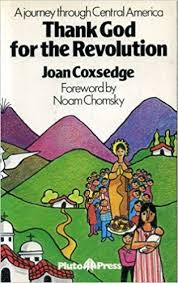
Australian Anti-War Activist Joan Coxsedge's October 24, 2020 Letter


The following letter from Australian anti-war and Latin American solidarity activist Joan Coxsedge--who is also a former member of the Victoria state parliament--originally appeared in an Australian-Cuban solidarity group's newsletter.


"October 24, 2020


"Dear Comrades,


"This year has been bizarre, one that most of us would like to forget. Now starting to slowly unwind, thank god.


"Having said that, I believe the attacks on Daniel Andrews are disgraceful, which says more about the Liberals and their right-wing viciousness than it does about Andrews, a viciousness which extends into their policy-making decisions where universities, artists and workers are the enemy.  Part of class warfare intensifying as labour rights continue to be violated.  As someone said, the problem with political jokes is that they tend to get elected.


"I laugh when people talk about returning to ‘normalcy’. Normalcy brought us the Iraq War, the War on Terror, the War on Drugs, torture, assassination by drone, billionaires, homelessness, gutting of welfare, wiretaps, militarised police, fracking, and let loose a psychotic American Empire on the world, with us crawling along behind.


"And the Defence Legislation Amendment, already passed by the House of Reps, is about to pounce.  This latest repressive nightmare aims to regulate the call out of defence forces responding to natural disasters, a bill that fails to define ‘other emergencies’ but permits foreign armies and police forces to be brought in to ’help us’, doesn’t restrict their use of force and gives them high levels of immunity under our laws.


"`Emergencies’ could include industrial disputes, demonstrations, and other protest actions that are perfectly legal if we lived in a democracy. For good measure, the government has extended ASIO powers even more, where journalists, environmentalists and advocacy groups could face compulsory questioning and being fitted with tracking devices.


"‘Democracy’ is popular because of the illusion of choice and participation it provides, but when you live in a society like ours where most people’s knowledge of the world extends no further than sports, sitcoms, reality shows and celebrity gossip, it’s downright dangerous.  Until people are properly educated and informed, democracy is nothing more than a clever tool used by the ruling class to subjugate the rest of us.


" Noam Chomsky, who can’t get published in his own country, put it this way: ‘It is regrettably, no exaggeration to say that we are living in an era of irrationality, deception, confusion, anger, and unfocussed fear - an ominous combination, with few precedents. There has never been a time when it was so important to have a voice of sanity, insight, understanding of what is happening in the world…’


"In the 30s, the Germans thought they were free, ignoring the ever-widening gap between the government and the people. It took place so gradually, each step so small and inconsequential and disguised as a temporary emergency measure, that people failed to see what was going on beneath the surface.


"When the US entered WW2, the future head of the CIA, Allen Dulles, bemoaned that his country was fighting the wrong enemy. The Nazis, he explained, were pro-capitalist Aryan Christians, whereas the true enemy was godless communism and its resolute anti-capitalism.  After all, the US, only some 20 years earlier, had been part of a massive military intervention in the USSR when fourteen capitalist countries sought to ‘strangle the Bolshevik baby in its crib’.


"Dulles understood, like many of his Government colleagues, that what would later become known as the Cold War was actually the old war against communism - and has never stopped.


"The danger, as Orwell wrote, is in the language. The sterilisation of words where meanings are cleansed and honed down. Torture is what other people do, whereas ‘we’ use ‘enhanced interrogation techniques’. Propaganda is what others do, we ‘promote democracy’.


"Like war, we prefer ‘pre-emptive actions to defend ourselves’ and engage in ‘targeted strikes to remove threats’ instead of assassinations.  Bombing raids on Iraq, Libya and Syria were ‘humanitarian missions’. The double-talk is everywhere.


"People like Chavez and Castro who redistributed wealth to the poor were ‘corrupt’ while western politicians taking jobs on the boards of banks, pharmaceutical companies and arms manufacturers are trying to make the world a better place.


"A case of ‘tell the truth if you dare’, like Julian Assange who dared. And we’ve seen what’s happened to him. Tortured so that his pain and suffering acts as a warning to others in case they want to warn us that the people we elected are corrupt, dishonest killers.


"It’s hardly news that the 800 US military bases in more than 70 countries around the globe have played a fundamental role in turning the entire world into a bloody battlefield, a massive military presence unlike anything we’ve ever seen before but rarely acknowledged, and a major reason why the US has consistently been in a state of war or military invasion for almost every year of its existence.  Once, weapons were manufactured to fight wars.  Now wars are manufactured to sell weapons. 


"From George Orwell:  ‘The further a society drifts from the truth, the more it will hate those that speak it.’   So speak out even louder, dear friends…


"Joan Coxsedge"


Monday, October 26, 2020

Dr. Alan Berkman's Case Revisited: Conclusion of book review


 Dr. Alan Berkman’s Case Revisited: Conclusion


The four chapters of Susan Reverby’s Co-Conspirator For Justice book’s Part 3 provide readers with a detailed look at what Dr. Berkman experienced in various U.S. prisons and jails, both before and after he developed life-threatening health issues in November 1985, six months after being arrested while still underground; and how, for a year, Dr. Berkman and the 5 other 1980’s Resistance Conspiracy Case co-defendants were in lockdown 23 hours a day. In addition, readers can also learn to what degree Dr. Berkman’s views about Movement-building strategies changed or did not change while he was imprisoned.


Dr. Berkman’s co-defendants in the Resistance Conspiracy Case eventually decided to settle the case “with guilty pleas and dropping of some of the charges” in 1990, so that the then-seriously ill Dr. Berkman “would be spared the pressure of a trial;” despite the excessively long sentences or additional sentences Dr. Berkman’s co-defendants received following their guilty pleas in the Resistance Conspiracy Case, according to Co-Conspirator For Justice. As one of Dr. Berkman’s co-defendants in this case (who was not released from prison herself until 2001) told Professor Reverby in a March 8, 2016 interview: “Our main goal was to get a deal for Alan so that he had a chance to get parole based on the other cases with lesser sentences. Every minute we thought about how we could get him better medical care.”


Dr. Berkman was finally released from prison in July 1992; and how he re-adjusted to the world outside and spent the remaining 17 years of his life, while continuing to confront and overcome some additional life-threatening health issues before his death in 2009, is what the final Part 4 of Co-Conspirator For Justice describes, in an emotionally moving way.


In the prologue to her Co-Conspirator For Justice book, Professor Reverby writes that she “really knew” Dr. Berkman “as a boy and young man,” but “wrote him only once when he was incarcerated” and “did not agree with his political tactics.” Yet her portrayal of members of the 1970’s and 1980’s May 19th and John Brown Anti-Klan Committee above-ground political groups and the underground groups, which Dr. Berkman was part of or supported, is more sympathetic and politically balanced than what one often finds in most other academic press or corporate media conglomerate-published book accounts of this period of U.S. New Left Movement history; or what one usually finds in historical narratives that make reference to the May 19th group, the BLA or the FALN in the newspapers, magazines and websites of historically politically competing U.S. left groups or sects or in corporate media news sources like the New York Times and New York Daily News.


But in its references to what happened during the 1960’s, 1970’s and 1980’s, unlike Dan Berger’s Outlaws of America book (that also describes what happened in the same decades, yet contains few references to Dr. Berkman’s significant role in Movement history), Co-Conspirator For Justice seems to rely more on white liberal-left academic or mainstream corporate media historical narratives than on 1960’s and 1970’s white counter-cultural underground press, African-American and Puerto newspaper accounts of what happened. And few articles written about the May 19th group and the BLA’s Oct. 20, 1981 action and subsequent-related trial proceedings from 1980’s U.S. radical left publications, like the now-defunct U.S. Guardian weekly newspaper, are cited in the this book’s footnotes.


In addition, only one sentence in the book contains a reference to Republic of New Afrika [RNA] above-ground organizer Ahmed Obafemi, whose political leadership the May 19th group activists generally followed in the late 1970s and 1980’s; and who was often a featured speaker at the late 1970’s and 1980’s public meetings organized by the May 19th group in NYC, in support of the BLA, the FALN and the granting of political prisoner or prisoner of war status and freedom for Dr. Berkman and other excessively sentenced anti-imperialist left and revolutionary nationalist movement activists or combatants. Yet as a posting about Ahmed Obafemi on the internet, for example, notes:


“Following his release from prison in 1976 until 1991 Brother Obafemi worked in the Harlem, New York community. He was a founding member of Freedom Now, a broad base coalition of organizations and individuals exposing human rights violations of political prisoners, which the government refuses to acknowledge, and has represented this coalition at the United Nations in Geneva Switzerland….Ahmed was also a member of other formations fighting against repression, namely the COINTELPRO Task Force on Research and Litigation, the New York Citizen’s Review Commission and the National Black Human Rights Coalition, which held a major rally for self-determination and reparations at the United Nations in New York three days after the liberation from prison of Assata Shakur. He was a key organizer of the grassroots movement that changed Lenox Avenue to Malcolm X Boulevard in Harlem, New York….”


Anti-imperialist left political activists on the Upper West Side and elsewhere in the USA who fear that a new case of political repression might develop in the current decade should, especially, consider checking out Susan Reverby’s well-written Co-Conspirator For Justice book (that also avoids using academic jargon).  And it might enable them to examine how at least one U.S. physician diagnosed the political repression cases of the 1970’s and 1980’s in the USA and elsewhere; and how his political response to the political repression cases of those decades affected the remaining portion of this U.S. revolutionary physician’s life.

(end of article, that was originally posted on Upper West Side Patch website) 


Sunday, October 25, 2020

Dr. Alan Berkman's Case Revisited: Part 3 of book review


 Dr. Alan Berkman’s Case Revisited: Part 3

Despite the FBI’s increased illegal surveillance of the above-ground May 19th group members involved in constitutionally protected political activity in the last years of the 1970’s, Professor Reverby’s Co-Conspirator For Justice book notes in chapter 7, however, that “alliances with Black and Puerto Rican revolutionaries were cemented” by May 19th group members during the same period; and “on the international level, anti-imperialism was ascendant” because in the late 1970’s the “Sandinista National Liberation Front had overthrown the Somoza dictatorship in Nicaragua,” the Shah of Iran’s dictatorship had been overthrown in Iran and Zimbabwe had won its independence (by means of armed struggle).


Yet a footnote to the same chapter also observes that after the six men and five women who were arrested by police in Evanston, Illinois on Apr. 4, 1980 were identified by the FBI as “long-sought members of the FALN” group of revolutionary Puerto Rican nationalists (whose struggle May 19th members had expressed solidarity with at the public meetings the May 19th group organized), the name of Dr. Berkman’s wife and May 19th member, Barbara Zeller, also “comes up many times between 1981 and 1982 in the FBI M19, Batches 1 and 2” de-classified FBI surveillance files on the May19th group; including de-classified FBI reports indicating she was under FBI surveillance while doing political support work in Chicago for the FALN defendants in the early 1980’s.


Chapter 8 of Co-Conspirator For Justice then attempts to historically summarize what happened on Oct. 20, 1981 in Rockland County, New York, when a member of the above-ground May 19th group and the above-ground John Brown Anti-Klan Committee (that May 19th members had taken the lead in creating and in which Dr. Berkman was also involved), Judy Clark, was arrested; after she participated, under the leadership of some armed members of an underground early 1980’s Black Liberation Army [BLA] unit, in a politically-motivated action that resulted in the deaths of a Brink’s guard and two policemen, prior to her arrest.


Professor Reverby also notes that (according to Dr. Berkman’s unpublished memoir and an Oct. 21, 1989 letter he wrote to a friend while imprisoned) later in the evening of Oct. 20, 1981 Dr. Berkman was asked to provide needed medical attention for another white woman anti-imperialist left activist who participated in the BLA-led action, Marilyn Buck (who had accidentally shot herself in the leg while driving away from the scene of the Oct. 20, 1981 shoot-out with police in Nyack, New York). And after agreeing to do so, Dr. Berkman was eventually driven to the underground BLA unit's safe house in Mount Vernon, New York even later that evening, where “he saved Marilyn Buck’s life.”


In its “Immediate Aftermath,” “Defense, Conspiracies, and The Grand Jury,” “Alan, The FBI And The State” and “One More Step” sections of chapter 8, Co-Conspirator For Justice indicates how the FBI and local police then utilized the politically biased, “trial by press”-type corporate media coverage of the Oct. 20, 1981 action to arrest or jail above-ground Republic of New Afrika [RNA] and May 19th members, above-ground BLA supporters and even above-ground former Weather Underground members, who “had done nothing except be friends or in political groups with those who had” been arrested for participating in the Oct. 20, 1981 BLA-led action.


As Professor Reverby recalls, “FBI and local police swooped down on” an RNA leader “outside Jackson, Mississippi, with tanks, guns and helicopter,” one above-ground May 19th organizer was “jailed for 17 months until the grand jury’s work was finished,” and “thirteen more men and women from the BLA, May 19th, and the remains of Weather would also be jailed for refusing to cooperate” with the grand juries. According to Dan Berger’s 2006 book, Outlaws Of America, “people were jailed for periods of 7 to 18 months for refusing to co-operate” with grand juries; and 1970’s WUO leader Bernardine Dohrn, for example, “spent 7 months in jail,” even though she had no information to give and disagreed with the Brink’s action, because she refused to testify before a grand jury.


So, not surprisingly, Dr. Berkman was also imprisoned between May and November 1982 as a grand jury resister, before going underground in February 1983, after being indicted for having provided life-saving medical care on Oct. 20, 1981, for the now-deceased longtime U.S. political prisoner Marilyn Buck (who nearly three decades later died of uterine cancer, less than two weeks after her release from prison in 2010).


Chapter 9 next gives readers some indication of how Dr. Berkman and the other anti-imperialist left members of the clandestine revolutionary group, which he then joined (that included Marilyn Buck), operated underground between 1983 and the arrest of its members in 1985; and it also describes what kind of politically-motivated “armed propaganda” actions the group was responsible for in the 1980’s. 


(end of part 3, to be continued. This article was originally posted on Upper West Side Patch website).


Saturday, October 24, 2020

Dr. Alan Berkman's Case Revisited: Part 2 of book review


Dr. Alan Berkman’s Case Revisited: Part 2


In addition to a prologue and coda (each of 5 pages) and 73 pages of end of book footnotes, the bulk of Professor Susan Reverby’s Co-Conspirator For Justice book consists of 16 chapters, divided into four parts (each containing a 2-page preview) that reflect the author’s political belief that Dr. Berkman’s “life embodied a form of solidarity that crossed all the usual lines as he continually negotiated the use, and negation, of the privileges his gender, class, sexuality, and race gave him;” and that there were “four parts of his journey: conventional upbringing, move toward political extremism, imprisonment of the worst kind, and recommitment to meaningful global political actions.”


Part 1, titled “Eagle Scout, Fraternity President, Doctor,” consists of four chapters that provide readers with some information about Dr. Berkman’s family background and what he was into while growing up in Middletown, New York and attending Cornell University as an undergraduate; before he started to become more politically radicalized, after enrolling at Columbia University’s institutionally racist College of Physicians and Surgeons medical school (which then accepted only “two Black men, one of whom was Nigerian,” in Dr. Berkman’s class of 1971) in Washington Heights, in the fall of 1967. And in a chapter titled “Dr. Salk or Dr. Lenin,” readers are told that in 1971, Dr. Berkman “was asked by individuals in the political underground connected to his Columbia friends if he would be willing to help out people who were formally in Weatherman,” he “quietly said yes” and he would then “see people in clandestine circumstances,” during the 1970’s.


Chapter 4 in Part 1, titled “Political Medicine,” is the most important chapter of this part of the book because, in its “New York To Wounded Knee” section, it recalls how Dr. Berkman, Barbara Zeller and a “political friend nurse,” brought medical supplies to the American Indian Movement [AIM] activists occupying Wounded Knee, South Dakota in 1973 and spent around 8 days with the AIM protesters “providing rudimentary” medical care; and it also indicates how Dr. Berkman was further radicalized, personally and politically, by what he experienced at Wounded Knee.


Readers who were politically active in the anti-imperialist left U.S. movements of the 1970’s, 1980’s and 1990’s will probably find Part 2, titled “Into The Struggle” and Part 3, titled “Life And Near Death In The American Gulag” of Co-Conspirator For Justice to be the most interesting parts of the book. Part 2 includes (besides its preview) five chapters, with the following titles: “Revolutionary Road”; “The Left of the Left”; “Creating Life, Choosing Love”; “Violence, Death, and Their Consequences”; and “Clandestine Actions”. And Part 3 includes (besides its preview, that’s titled “The Government Strikes Back”) four chapters with the following titles: “Becoming Brother Doc”; “Isolation and Rethinking”; “Resistance Is Not A Crime”; and “A Conspiracy for Life”. 


According to chapter 5 of Co-Conspirator For Justice, when the U.S. anti-imperialist leftist Weather Underground Organization [WUO] released its collectively-written book, Prairie Fire: The Politics of Revolutionary Anti-Imperialism in July of 1974, Dr. Berkman “was critical of Prairie Fire’s final draft and its politics” and “did not plan to be part of what was being called the Prairie Fire Distribution Committee.”


Yet, according to the same chapter, after spending “several months over the summer of 1974 at the Lowndes County Community Health Clinic in Haynesville, Alabama,” Dr. Berkman was “recruited by what the Weather leadership now called the Prairie Fire Organizing Committee or PFOC” and “asked to take a leadership role in the Northeast.” And in the fall of 1975, “the Weather leadership asked" him and another PFOC organizer “to be two of the five national organizers for what would be called the `Hard Times Are Fighting Times’ Conference,” that was held in Chicago between Jan. 30 and Feb. 1, 1976, which attracted over 2,000 U.S. anti-imperialist Movement activists and supporters (and was reported on extensively by U.S. leftist journals and newspapers, like the now-defunct, then-Manhattan-based, independent radical U.S. left weekly Guardian newspaper).


Chapter 6 of Professor Susan Reverby’s Co-Conspirator For Justice book then describes how, following this conference, former PFOC group members in New York “formed the above-ground group they called the May 19th Communist Organization;” and that Dr. Berkman was “one of the few men who remained in May 19th” during the late 1970’s and early 1980’s. But Professor Reverby (who received a first batch of de-classified FBI “May 19th Communist Organization” surveillance files in April 2019 and a second batch of de-classified FBI “May 19th Communist Organization” files in October 2019) notes that “the FBI began to track the group” in the late 1970’s; although this group of politically dissident U.S. Movement activists included “probably fewer than 100 people.” 


After he became “the attending physician for imprisoned Puerto Rican militant William Guillermo Morales” and Morales later escaped from the prison ward at Bellevue Hospital in May 1979, for example, Dr. Berkman was, according to this chapter “brought under the watchful eyes of the FBI;” and “the FBI records on May 19th repeatedly reference Alan’s purported role in Morales’s escape.”

(end of part 2, to be continued. This article was originally posted on the Upper West Side Patch website)


Thursday, October 22, 2020

Dr. Alan Berkman's Case Revisited: Part 1 of book review


 “…Sadly, the end of May and beginning of June were very hard times for me…Alan Berkman, not only a staunch anti-imperialist who worked and fought in solidarity with oppressed people and nations, but also one of my comrade codefendants and a very human, dedication man died from the cancers he had been battling and always winning, until June…And yet we continue to sing, remembering those who have come before and will come after…”—Resistance Conspiracy Case Co-Defendant and (now-deceased) U.S. Political Prisoner Marilyn Buck in 2009


Dr. Alan Berkman’s Case Revisited 


On the Upper West Side and in other New York City neighborhoods during the 1980’s, some members or supporters of dissident political groups (like the Republic of New Afrika [RNA], committees involved in the struggle for Puerto Rican independence, and the May 19th Communist Organization) were especially targeted by the U.S. government for detention without trial and/or imprisonment; and, if convicted, were treated as “common criminals” or “terrorists,” rather than as political prisoners, while incarcerated—after receiving excessively long prison sentences.


One such target of U.S. government repression during the 1980’s was a physician and May 19th group member named Alan Berkman who, after attending Columbia University’s medical school in the late 1960’s and early 1970’s, spent around 8 years in various U.S. prison cells between 1982 and 1992.  So in her new University of North Carolina Press-published biography of Dr. Berkman (who died in 2009 at the age of 63), Co-Conspirator For Justice: The Revolutionary Life Of Dr. Alan Berkman, Wellesley College Professor Emerita Susan M. Reverby examines “Alan’s unique journey into differing forms of political action;” and observes that “the revolutionary movements of Native Americans, Puerto Ricans, and African Americans considered him a comrade who took personal risks, courted death, and repeatedly refused the FBI’s promise of freedom and witness protection if he gave information on his allies.”


Around three years after Dr. Berkman’s death, “his widow, the physician Barbara Zeller,” gave Professor Reverby “his unpublished memoir, hundreds of letters, pages of legal papers, and linked” Reverby “to friends—willing to talk.” According to Reverby, Dr. Berkman’s unpublished “memoir was built upon the letters” he “sent out during the years he was incarcerated as well as any journal notes” made in prison that “he was able to keep;” and “when he wrote” his memoir, “circa early in 2000, he asked his correspondents” during his period of incarceration “to return his letters to him.”


After parts of this unpublished memoir, titled “Brother Doc,” were given to two of his friends to provide some editing help, Dr. Berkman next “contacted a fraternity brother” (from his early 1960’s undergraduate days as a pre-med student at Cornell University) “who was now a renowned sports agent and entertainment lawyer,” who then “passed the book on to a literary agent who…pronounced Alan’s voice not dramatic enough,” according to Co-Conspirator For Justice. Reverby notes, however, that one of the friends who helped edit the manuscript “blamed the loss of the publishing opportunity on Alan’s taking the manuscript to the fraternity brother.”


Yet another reason the “Brother Doc” memoir was never finished between 2001 and 2009 by Dr. Berkman was, perhaps, because he worried that “he could not tell the whole truth about his comrades who were still in prison or could be tried on other charges” and “he had too much else to do,” according to Co-Conspirator For Justice.


Besides the unpublished “Brother Doc” manuscript and Dr. Berkman’s letters, other historical informational sources for Professor Reverby’s biography came from nearly 100 “interviews in person or by Skype, email, or telephone with Alan’s friends, lawyers, family, and comrades,” historical material contained in the San Francisco-based Freedom Archives and the material contained in the papers that Dr. Berkman’s 1980’s Resistance Conspiracy Case Co-Defendant and former U.S. political prisoner and May 19th group member, Susan Rosenberg, donated to the Archives at Smith College, “which provide an additional perspective on the legal issues and the Resistance Conspiracy Case," according Co-Conspirator For Justice’s “Note On Sources.”


By means of a Freedom of Information Act request in 2013, the Co-Conspirator For Justice author was also able to obtain a de-classified copy of Dr. Berkman’s FBI file to utilize while writing his biography; and in 2019, “right before the book went into production,” Professor Reverby was able “to obtain all of the May 19th Communist Organizations FBI files,” that have been de-classified so far. (end of part 1, to be continued. This book review was originally posted on Upper West Side Patch website)